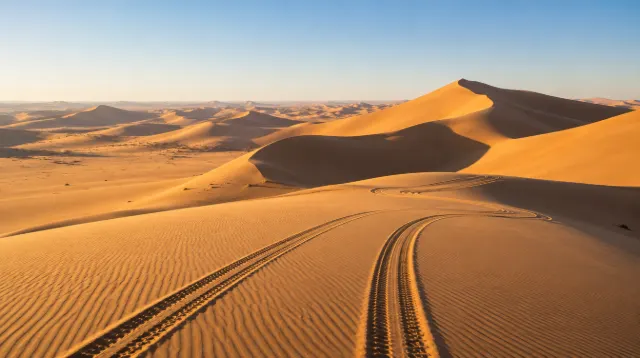
Dune Bashing for Beginners: Where to Go and How to Prepare in the UAE
A beginner’s guide to dune bashing in the UAE: when to go, tyre pressures, driving technique, safety rules, what to pack and beginner-friendly desert areas.

How to drive UAE wadis safely: checking weather warnings, flash flood dangers, water crossings, rocky tracks, where not to camp and respecting communities.
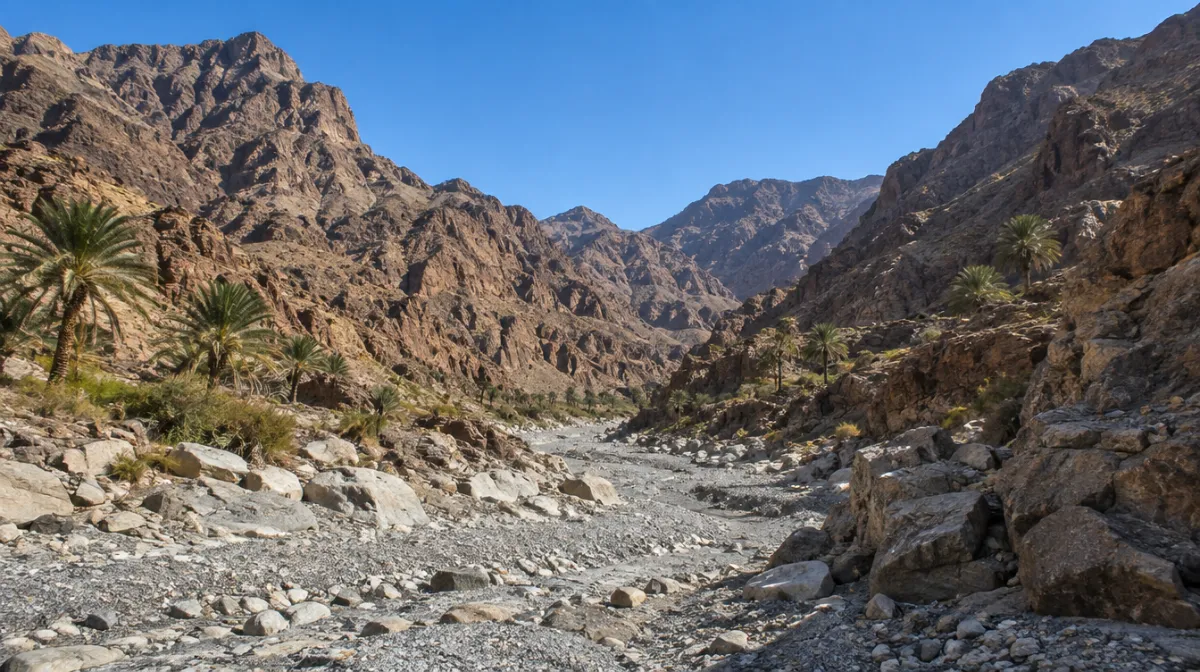
Wadis, the dry riverbeds that cut through the Hajar Mountains, lead to some of the UAE’s most beautiful scenery: pools, palm groves, gorges and old villages. They also carry the country’s most sudden natural danger. When rain falls in the mountains, a dry wadi can become a torrent within minutes.
Check forecasts and alerts from the National Center of Meteorology before every trip, including for rain in the mountains upstream of where you’re going. Never enter a wadi during rain or when warnings are in place. Authorities can fine drivers and impound vehicles for entering wadis in bad weather, and roads into some areas are closed after storms.
Flash floods can arrive under a clear sky if rain fell kilometres away. Signs include a sudden rise in water level, muddy or fast-flowing water, floating debris and a roar from upstream. If you see any of these, get to high ground immediately, on foot if necessary. Vehicles can be replaced; people can’t.
According to the US National Weather Service, as little as 15 cm of fast-moving water can knock an adult off their feet, and around 30 cm can carry away most cars.
| Do | Don’t |
|---|---|
| Walk the crossing first to check depth and footing, only in still or slow water | Cross fast-moving or rising water |
| Know your vehicle’s wading depth from the manufacturer | Assume a snorkel makes deep water safe |
| Cross slowly and steadily in low range | Charge in and create a large splash |
| Wait on the far side for others | Stop midstream |
If you’re unsure, don’t cross. Turn around.
Good tyres make a big difference; see our all-terrain tyre guide.
Pitch camp on high ground, well above the flood line, even if the sky is clear. Flash floods often strike at night.
Many wadis pass farms, villages and traditional falaj irrigation channels. Drive slowly near homes, don’t block tracks, stay off private land, don’t swim where signs prohibit it and take all rubbish home.
Travel with at least one other vehicle, tell someone your plans, carry water and a desert first-aid kit, and learn from experienced drivers; our guide to UAE off-road clubs explains how to join organised trips. Visiting the Hatta area? UAE Travel Agency’s Hatta travel guide covers the sights beyond the tracks. For sand driving closer to the city, see our off-road spots near Dubai.
In the cooler months, on clear, settled days with no rain forecast in the mountains. Avoid the days after heavy rain, when tracks may be damaged and water levels high.
Some pools are popular swimming spots, but check local rules, water depth and conditions, and never swim when there’s any risk of rain or flooding.
For most wadi tracks, yes: a high-clearance 4x4 with low range and good tyres. Some wadis have paved access roads to the main sights.

Every article is edited by a human and checked against our editorial policy. Spotted a mistake? Tell us.
A beginner’s guide to dune bashing in the UAE: when to go, tyre pressures, driving technique, safety rules, what to pack and beginner-friendly desert areas.
The best off-road areas within reach of Dubai, from Big Red and Fossil Rock to the red dunes near Lahbab, with difficulty levels, access rules and safety tips.
A 4x4 driver’s guide to the Liwa desert: when to go, getting there, the scale of the dunes, fuel and supplies, convoy rules, camping and staying safe.