Best Off-Road Spots Near Dubai
The best off-road areas within reach of Dubai, from Big Red and Fossil Rock to the red dunes near Lahbab, with difficulty levels, access rules and safety tips.

A beginner’s guide to dune bashing in the UAE: when to go, tyre pressures, driving technique, safety rules, what to pack and beginner-friendly desert areas.
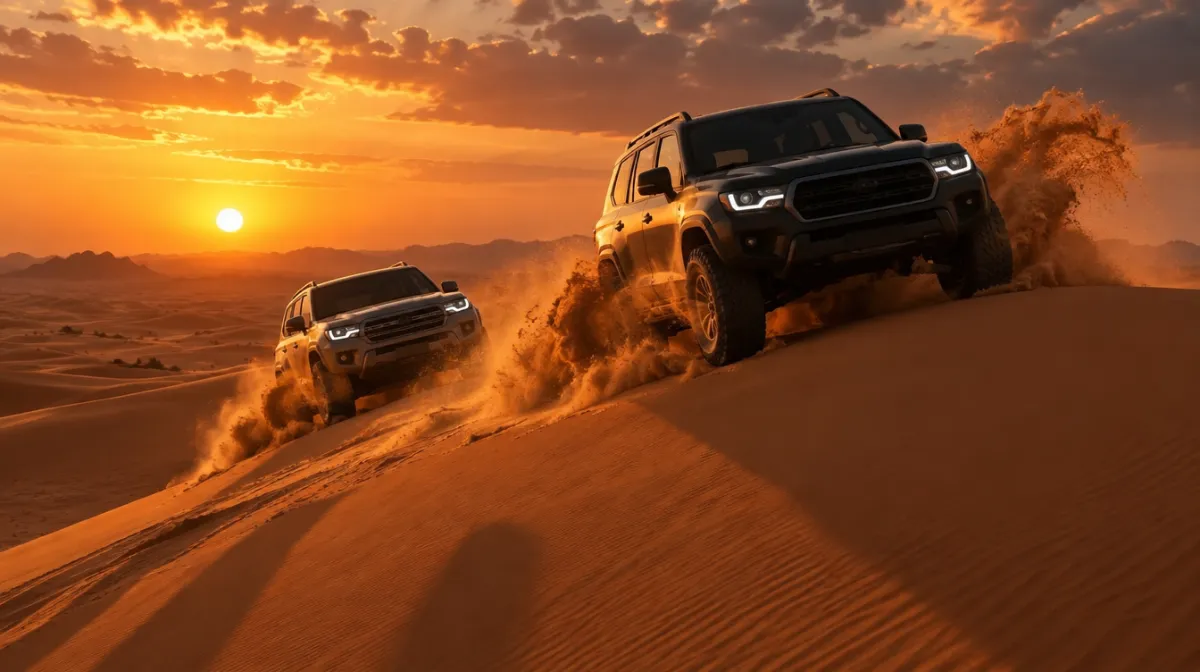
Driving your own 4x4 across the UAE’s dunes is one of the great experiences of living in the Gulf. It is also genuinely dangerous if you go unprepared. Rollovers, heat exhaustion and getting stranded are all real risks. This guide covers what beginners need to know before their first drive.
The dune season runs from roughly October to April, when temperatures are manageable. In summer, desert temperatures can be extreme, and a breakdown becomes a medical emergency. If you do go in warmer months, go early in the morning and carry far more water than you think you need. For the best months, see our sister site’s guide to the best time to visit the UAE.
Always travel with at least two vehicles, ideally with an experienced lead driver who knows the area. Many beginners start with an off-road club or a guided convoy, which is the safest way to learn. Tell someone at home where you are going and when you expect to be back.
Lowering tyre pressure lengthens the tyre’s footprint, so it floats on sand instead of digging in. A common starting point for soft sand is around 15–18 psi (about 1.0–1.25 bar), depending on your vehicle, tyres and load. Check your tyre manufacturer’s guidance, deflate all four tyres evenly and reinflate before driving back on tarmac. Driving at speed on underinflated tyres is dangerous.
Choose areas that are popular, easy to reach and busy enough that help is never far away. Our list of off-road spots near Dubai covers more options.
| Area | Emirate | Notes |
|---|---|---|
| Al Faya | Sharjah | Popular with beginners and clubs; varied dunes |
| Big Red | Sharjah, off the Dubai–Hatta road | Famous tall dune; very busy at weekends |
| Fossil Rock | Sharjah | Scenic, with routes for different levels |
| Liwa | Abu Dhabi | Vast, spectacular dunes; best with experienced guides |
Some desert areas are protected or restricted, including nature reserves. Stay out of fenced and signed areas and follow local rules.
Driving in designated and open desert areas is common, but some areas are protected or restricted. Follow local rules and signage.
Most rental agreements prohibit off-road driving, and insurance usually won’t cover it. Check your contract or book a guided desert tour instead.
Many drivers start around 15–18 psi for soft sand, adjusting for vehicle weight and tyre type. Always reinflate before returning to the road.

Every article is edited by a human and checked against our editorial policy. Spotted a mistake? Tell us.
The best off-road areas within reach of Dubai, from Big Red and Fossil Rock to the red dunes near Lahbab, with difficulty levels, access rules and safety tips.
A 4x4 driver’s guide to the Liwa desert: when to go, getting there, the scale of the dunes, fuel and supplies, convoy rules, camping and staying safe.
What to do when your 4x4 gets stuck in soft sand: stop spinning, lower tyre pressure, dig and use recovery boards, and how to do a snatch recovery safely.